
King Child
Roster
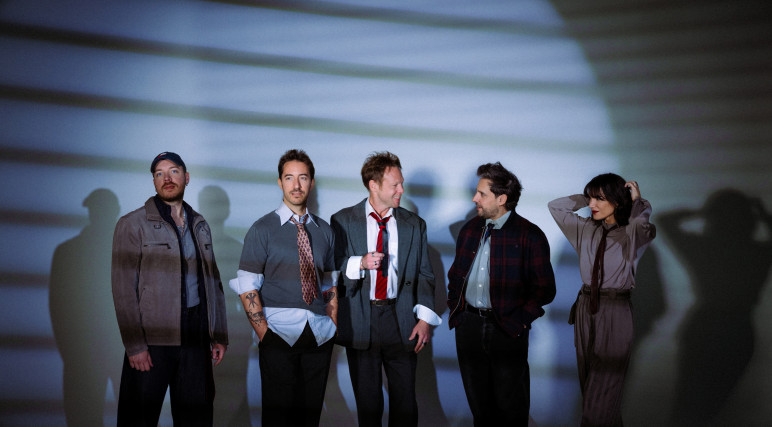
© Simon Vanrie
King Child thrives on contradictions: immediate melodies and sophisticated arrangements, the colours of the 1970s and contemporary production, bright music addressing a world that is anything but.
Originally formed in Brussels around Jean Prat and Quentin Hoogaert, King Child gradually evolved into a full band with Emmanuel Prat, Leila Alev and Micka Chainis.
From the beginning, the group has developed an ambitious form of pop shaped by psychedelia, vocal harmonies and a taste for songs that continue to reveal themselves over time.
After several years away, King Child opens a new chapter with Toys, their third album.
For this record, the band reshuffled the foundations of its own sound. Guitars disappear completely, piano — previously a major part of King Child’s identity — moves into the background, while bass, drums, synthesizers and vocal harmonies become the main building blocks of the arrangements.
The Beatles, Tame Impala, Balthazar, Warhaus, Radiohead and De Staat can all be heard somewhere in the landscape, but King Child is less interested in recreating a particular era than in bringing two worlds together: the melodic ambition and colours of 1960s and 70s pop with the immediacy of contemporary alternative production.
That musical evolution goes hand in hand with a more direct engagement with the present.
Power structures, technology, identity, isolation, the repetition of history and transmission between generations all run through the band’s songs, often creating a deliberate contrast between serious subject matter and music that remains colourful, accessible and at times unmistakably dance-driven.
With Toys, King Child ultimately embraces a fairly simple ambition: to make pop that is accessible without being simplistic, sophisticated without becoming showy, informed by the past without being nostalgic — and rich enough to keep revealing something new with every listen.